
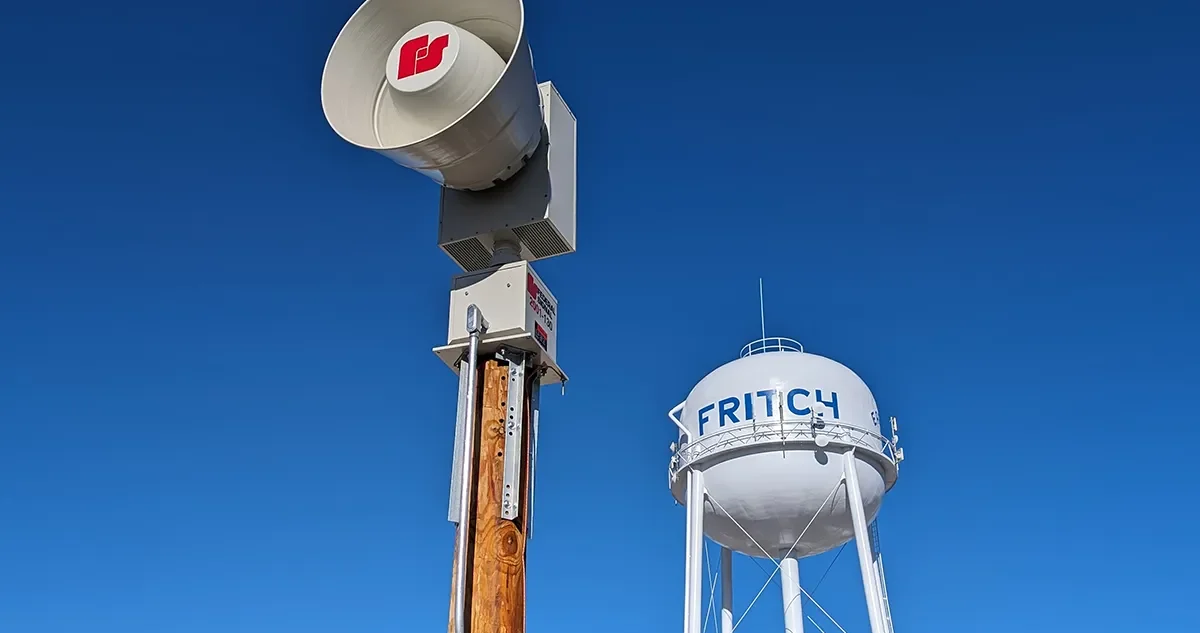
Your guide to how outdoor warning sirens protect communities and why proper design and maintenance are essential for saving lives.
The Sound That Saves Lives
When severe weather or an industrial emergency threatens a community, a single sound can make all the difference. Outdoor warning sirens are that sound. They are a powerful, unmistakable alert designed to grab attention and prompt immediate protective action.
While nearly everyone has heard a siren before, few understand what’s happening behind the scenes when those tones fill the air. Outdoor warning systems are complex networks of technology, engineering, and communication, and when properly designed and maintained, they save lives.
At OmniWarn Public Safety, we specialize in helping communities, campuses, and industrial facilities across Oklahoma, Texas, Louisiana, New Mexico, Arkansas, and Arizona design, install, and maintain reliable outdoor warning sirens and mass notification systems. Here’s what makes these systems so vital and how they work when seconds count.
What Outdoor Warning Sirens Are (and What They’re Not)
Outdoor warning sirens are designed to alert people who are outdoors to take immediate action, usually to seek shelter and look for additional information from local media or smartphone alerts. They are not designed to wake people indoors or replace mobile alert systems like FEMA’s IPAWS program.
Instead, sirens are one layer in a comprehensive mass notification strategy that may include text alerts, email notifications, and indoor PA systems. This layered approach ensures that messages reach everyone, regardless of where they are.
When properly implemented, sirens serve as the first audible warning that danger is near, giving communities precious minutes to respond.
The Technology Behind the Sound
Outdoor warning sirens may look simple, but they’re sophisticated systems built for reliability and power.
A typical siren setup includes:
- Siren heads: The speaker or rotor that projects sound across several miles.
- Amplifiers and controllers: These regulate sound output and signal tone patterns.
- Power systems: Either AC-powered, battery-backed, or solar-assisted for continuous readiness.
- Communication links: Radio, cellular, or IP-based connections that allow centralized activation.
There are two main types of sirens:
- Electromechanical sirens, which use rotating motors to produce classic wailing tones (such as your classic tornado siren).
- Electronic sirens, which use speaker arrays for more flexible tones and even voice messages.
For larger campuses, military bases, and industrial complexes, Giant Voice Sirens provide both tone and intelligible voice alerts, an ideal solution for areas that require clear, spoken instructions during emergencies.
How Sirens Are Activated During an Emergency
Modern siren systems are typically activated from an emergency operations center, dispatch center, or through secure remote software. Activation can be manual or automated, depending on the system’s design.
Today’s advanced systems integrate with emergency notification software and federal programs like IPAWS (Integrated Public Alert and Warning System). This allows authorized agencies to trigger sirens and other alerts simultaneously across multiple channels (sirens, text messages, TV, and radio) ensuring a unified and timely alert.
OmniWarn’s technicians design siren systems with redundant communication paths (radio, IP, satellite) to ensure activation reliability even during severe weather, power outages, or network disruptions.
Why Proper Design, Placement, and Testing Matter
The effectiveness of a siren system depends greatly on how it’s designed and positioned. Factors like topography, population density, ambient noise, and prevailing wind direction all influence sound coverage.
OmniWarn’s warning system design services use professional acoustic modeling tools to map optimal siren placement. This ensures every siren contributes to full-area coverage without unnecessary overlap or dead zones.
Regular testing and maintenance are equally important. Routine audible tests, silent diagnostics, and annual inspections confirm that sirens rotate properly, tones are clear, and communication links function as expected. OmniWarn’s siren repair and maintenance services help communities avoid failures during critical moments.
The Real-World Impact of Reliable Siren Systems
Real-world emergencies have proven the life-saving value of outdoor warning systems. During tornado outbreaks across Oklahoma and Texas, for example, well-maintained sirens have given residents crucial minutes to seek shelter, significantly reducing injuries and fatalities.
Beyond weather, outdoor warning sirens serve many other functions:
- Industrial alerts for chemical or gas leaks.
- Campus lockdowns or public safety announcements.
- Wildfire evacuation warnings in rural areas.
Communities that invest in dependable siren systems not only protect residents but also strengthen public trust and preparedness. OmniWarn’s long-standing partnerships with municipalities, utilities, and industrial clients across the Southwest demonstrate our commitment to reliable public safety infrastructure.
Modern Innovations in Outdoor Warning Systems
Today’s outdoor warning systems are smarter, greener, and more connected than ever. Innovations include:
- Solar-powered sirens that minimize energy costs and provide backup power.
- Two-way communication for system monitoring and diagnostics.
- IP-based control systems that allow secure remote activation and real-time status updates.
OmniWarn helps communities modernize older systems through professional installation and upgrades, ensuring compatibility with modern communication networks and compliance with national alerting standards.
Don’t Wait Until the Next Storm to Think About Your Sirens
Outdoor warning sirens are a community’s voice in times of crisis, but that voice must be loud, clear, and dependable. Whether you’re planning a new system or need to assess an existing one, proactive design and maintenance are key.
OmniWarn Public Safety is the factory-direct Federal Signal representative for Oklahoma, Texas, Louisiana, New Mexico, Arkansas, and Arizona, and our experts are ready to help you build or upgrade a system you can count on.
Request a free consultation today to schedule a siren system evaluation or demo. Together, we’ll make sure your community stays alert, informed, and safe when it matters most.