

When an emergency strikes, every second matters. Whether you’re protecting a city, county, or college campus, effective communication can mean the difference between chaos and calm. Our mass notification systems guide explains how these critical tools deliver fast, reliable alerts to keep people informed and safe, indoors, outdoors, and everywhere in between.
If you’re a community leader, safety manager, or campus administrator evaluating new alert technology, this guide will help you understand the options available and how to choose the right system for your needs.
What Is a Mass Notification System?
A mass notification system is a coordinated network of devices and software designed to send urgent messages to large groups of people simultaneously. These systems are used by municipalities, counties, schools, and universities to warn the public of severe weather, security threats, evacuations, or other critical emergencies.
Modern systems combine multiple communication channels, such as outdoor warning sirens, indoor speakers, emergency notification software, and mobile alerts, ensuring that messages reach everyone, no matter where they are.
Mass Notification Systems Guide:
Comparing Your Options
This mass notification systems guide breaks down the four main types of alert technologies including outdoor warning sirens, indoor warning systems, emergency notification software, and mobile alerts. Understanding how each works helps community leaders, safety managers, and campus administrators design a comprehensive, reliable communication network for every emergency scenario.
1. Outdoor Warning Sirens: The First Line of Defense
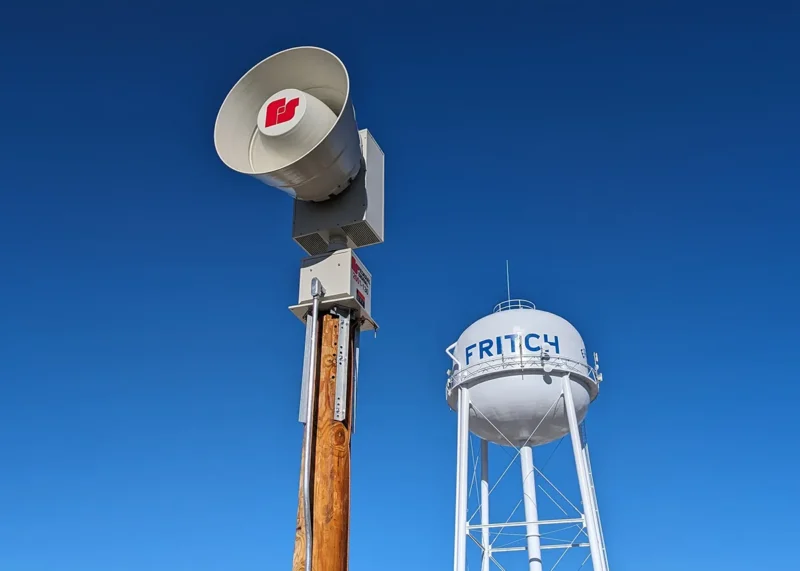
Outdoor warning sirens remain one of the most effective ways to alert entire communities during severe weather or large-scale emergencies.

How Outdoor Warning Sirens Work:
Strategically placed sirens broadcast high-decibel tones or voice messages that can be heard over several miles. They’re ideal for reaching people outdoors, in parks, neighborhoods, sports facilities, or campuses.
When to Use:
- Tornado and severe weather alerts
- Chemical spills or industrial accidents
- Evacuation orders or shelter-in-place notifications
OmniWarn’s Expertise:
OmniWarn designs, installs, and maintains outdoor warning sirens for communities, universities, and military bases. Using advanced mapping and acoustic modeling, we ensure maximum coverage and clarity.
2. Indoor Warning Systems: Keeping People Safe Inside
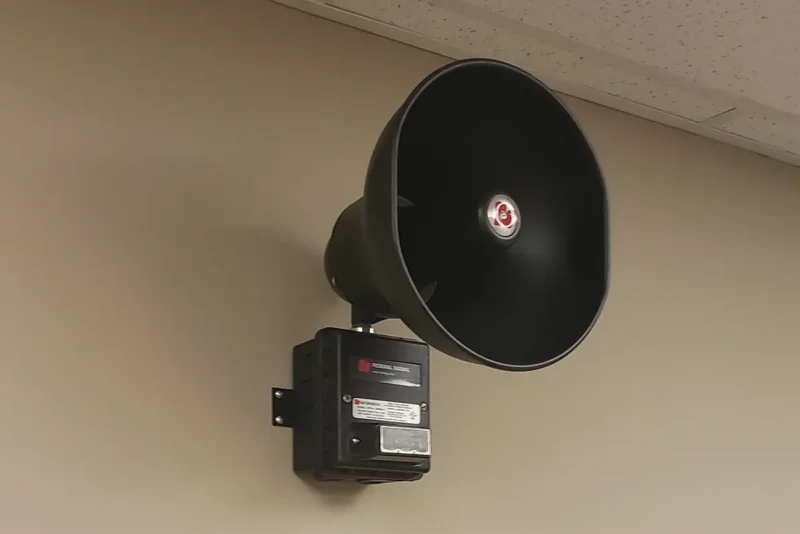
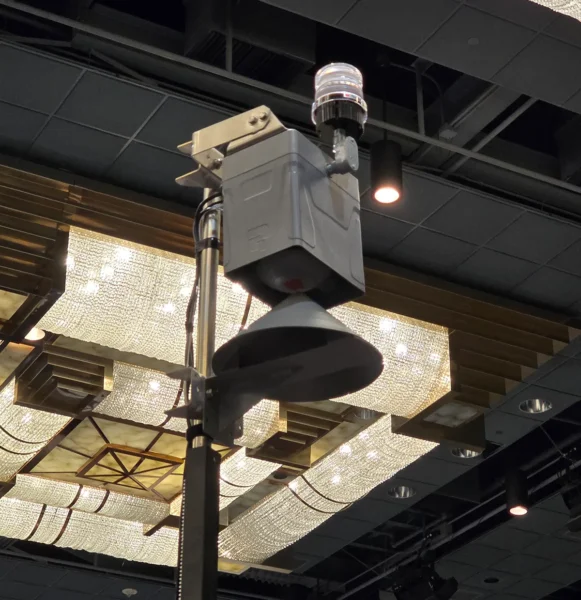
While outdoor sirens alert those outside, indoor warning systems reach people in classrooms, offices, dormitories, and public buildings.
Key Features of Indoor Warning Systems:
- Wall-mounted speakers and strobes for visual and audible alerts
- Integration with PA systems, fire alarms, and two-way radios
- Automated activation from central control or emergency software
Best For:
- Schools, colleges, and universities
- Government buildings and corporate campuses
- Public facilities with large indoor populations
Indoor systems ensure that no one misses a critical alert, even when mobile service or internet access is unavailable.
3. Emergency Notification Software: Real-Time Communication Across Channels
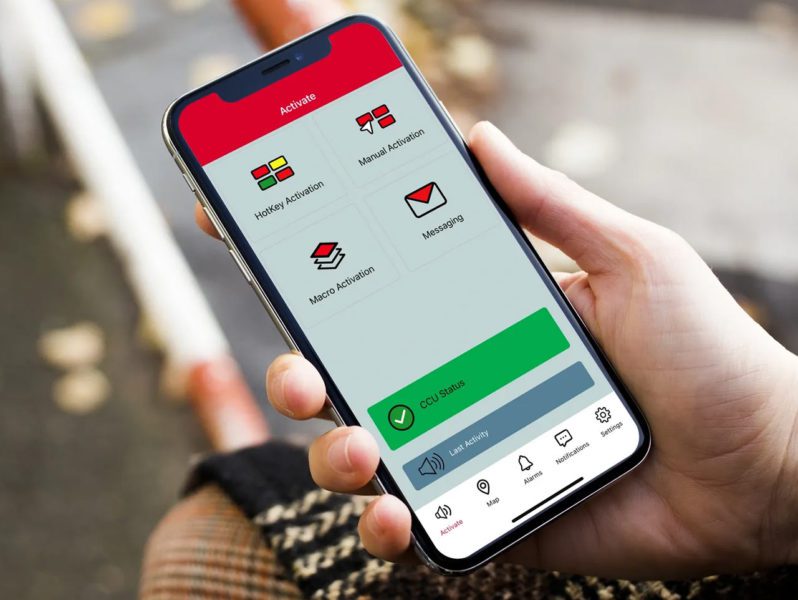
Emergency notification software allows administrators to send messages instantly via text, email, phone, and public address systems.
Benefits of Emergency Notification Software
- Centralized control for multiple alerting methods
- Integration with FEMA’s IPAWS for official emergency broadcasts
- Detailed reporting to confirm message delivery
Best For:
- City and county officials managing multiple jurisdictions
- Campus safety teams coordinating across departments
- Facilities seeking unified control of outdoor and indoor alerts
OmniWarn’s software solutions give local leaders the power to communicate quickly and clearly, from a single dashboard.
4. Mobile and Personalized Alerts: Reaching Individuals Directly
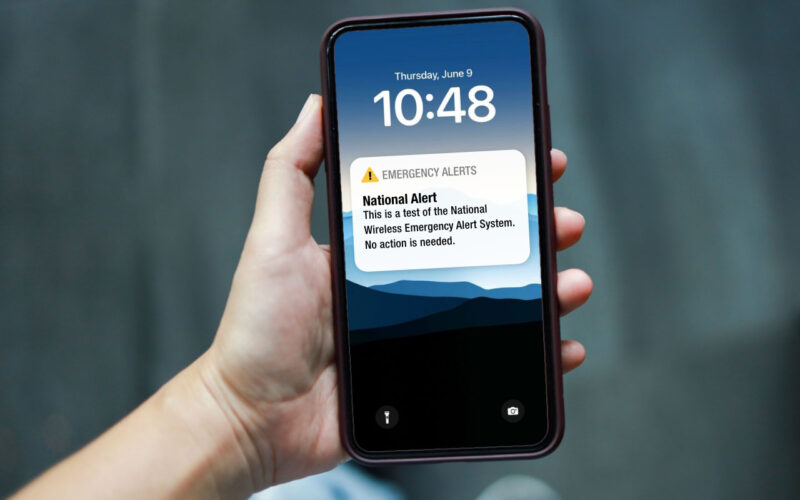
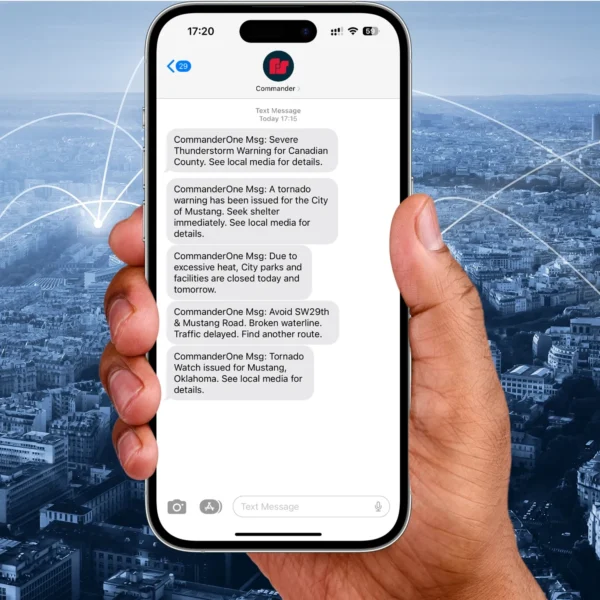
Mobile alerts are crucial for reaching residents, students, and staff wherever they are. Modern mass notification software can send geo-targeted texts, push notifications, or automated calls to subscribers within seconds.
Why It Matters:
- Extends coverage beyond siren range
- Provides detailed instructions (e.g., evacuation routes, shelter info)
- Supports multilingual messages for diverse populations
When paired with outdoor and indoor systems, mobile alerts complete a layered communication strategy, ensuring redundancy and reliability.
5. Choosing the Right Combination for Your Community or Campus
No single solution fits every scenario, that’s why our mass notification systems guide helps you evaluate which mix of technologies best protects your community. A city may rely on outdoor sirens and public broadcast alerts, while a university might combine indoor speakers, software alerts, and mobile notifications for complete coverage.
Factors to Consider:
- Population density and geography
- Typical emergency types (weather, security, industrial)
- Existing infrastructure and communication networks
- Budget and long-term maintenance needs
OmniWarn’s system design and installation experts use data-driven modeling to assess risks, map sound coverage, and deliver a customized solution. With insight from this mass notification systems guide, and OmniWarn’s decades of field experience, you can build a safer, more connected community.
Why Choose OmniWarn for Your Mass Notification System
OmniWarn Public Safety is a Federal Signal representative and service provider serving Oklahoma, Texas, Louisiana, New Mexico, Arkansas, and Arizona, with nationwide capabilities. Our team designs, installs, and maintains systems that meet FEMA, NFPA, and IPAWS standards. With decades of experience in community safety, we ensure your warning systems are:
- Reliable and compliant
- Easy to operate and maintain
- Scalable for future growth
Take the Next Step Toward a Safer, More Informed Community
Protecting lives starts with reliable communication. Whether you’re evaluating upgrades, expanding coverage, or building a new system from the ground up, OmniWarn can help.
Request a free consultation online today or call 1-833-360-WARN to discuss your community or campus mass notification needs today.