
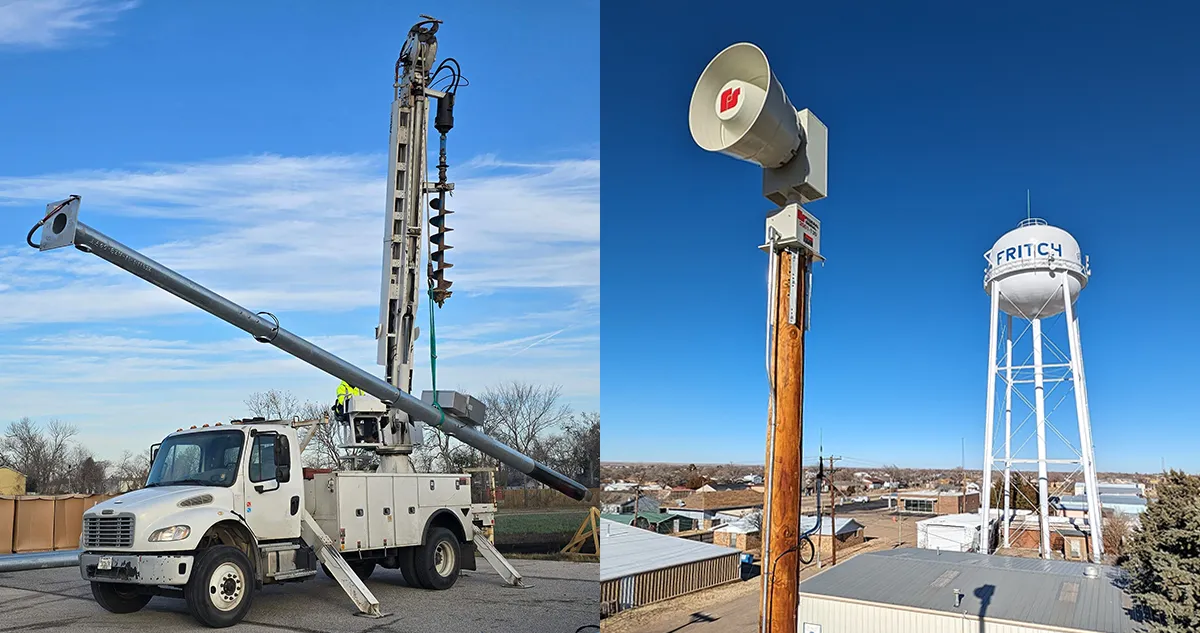
Effective tornado warning system planning starts long before severe weather appears on the radar. Cities, counties, campuses, public facilities, industrial sites, and large outdoor spaces need clear ways to detect threats, activate alerts, warn people outdoors, share instructions, and keep equipment ready when minutes matter.
A tornado warning system is not just a siren on a pole. It can include outdoor warning sirens, control systems, activation protocols, emergency notification software, indoor alerts, weather monitoring tools, backup power, maintenance schedules, and trained personnel. When those pieces work together, they help public safety teams alert more people in more situations.
For communities across Texas, Oklahoma, Arkansas, Louisiana, New Mexico, Arizona, and nationwide, the goal is simple: build a warning strategy that fits the risks, people, geography, facilities, and response procedures of the place it protects.
Why Tornado Warning System Planning Matters
The National Weather Service explains that tornadoes can occur at any time of day or night and at any time of year. Tornadoes are most common in the Central Plains and southeastern United States, but they have been reported in all 50 states. That means tornado preparedness is not just a spring concern or a “Tornado Alley” issue.
For local governments, schools, universities, plants, hospitals, military facilities, parks, and event venues, warning system planning helps answer critical questions before an emergency happens. Who needs to be warned? How will alerts be activated? What areas need outdoor siren coverage? Which buildings need indoor alerts? Who can send messages? What happens if power, cellular service, or equipment fails?
A strong plan gives emergency managers and facility leaders a practical roadmap. It also helps decision-makers invest in systems that are easier to operate, test, maintain, and expand.
Start With the People and Places You Need to Protect
The first step is to define who the system must reach. A city or county may need to alert residents, visitors, outdoor workers, schools, parks, downtown areas, and rural communities. A campus may need to reach students, faculty, staff, visitors, athletic facilities, residence halls, and outdoor gathering areas. An industrial site may need to alert employees, contractors, truck drivers, security teams, and nearby zones.
Each audience may need a different alerting method. People indoors may need software alerts, building notifications, voice messages, or internal procedures. People outdoors may need outdoor warning sirens, voice-capable alerts, visible signage, or staff direction. Visitors may not be enrolled in a local notification system, so public-facing alerting tools matter.
Good planning also considers access and mobility. Hospitals, schools, campuses, and public venues may need extra time to move people to safe areas. Parks, fairgrounds, sports complexes, and recreation facilities may need alerts that reach people spread across large outdoor spaces.
Identify the Hazards the System Must Support
A tornado may be the main planning concern, but most organizations need multi-hazard alerting. Severe thunderstorms, high winds, lightning, flash flooding, hazardous materials incidents, evacuations, utility failures, security threats, and shelter-in-place orders may also require fast public notification.
This matters because the system should not be designed around one tone or one scenario only. Different threats may require different messages, activation procedures, or alert zones. A tornado warning may call for immediate shelter. A hazardous materials incident may require people to move indoors and avoid a specific area. A flood warning may require road closures or evacuation routes.
Tornado warning systems are strongest when they fit into a broader emergency communication strategy. That strategy should help trained personnel warn people quickly and provide clear follow-up instructions when conditions change.
Evaluate Outdoor Siren Coverage Needs
Outdoor sirens are one of the most visible parts of a tornado warning system. They are designed to alert people who are outdoors and may not have immediate access to a phone, radio, television, or indoor alert. For many cities, counties, campuses, industrial sites, military bases, parks, and outdoor venues, sirens are a critical public safety layer.
However, siren placement should not be based on guesswork. Coverage can be affected by terrain, trees, buildings, background noise, elevation, development patterns, and the type of siren selected. A siren that works well in one area may not provide the same coverage in another.
Professional warning system design helps determine how many sirens are needed, where they should be placed, how they should be activated, and how future growth should be handled. For communities that already have older sirens, the design process can also identify gaps, outdated equipment, or modernization opportunities.
Decide How Alerts Will Be Activated
A tornado warning system needs a clear activation process. That process should define who can activate the system, what information they need, which areas should be alerted, and how different alert types should be used.
For a city or county, activation may involve emergency management, dispatch, public safety leadership, or authorized staff. For a campus, it may involve campus safety, emergency management, administration, or facilities leadership. For an industrial plant or medical facility, activation may involve security, operations, safety, or emergency response teams.
The system should also support backup procedures. If the primary activation method fails, authorized personnel need another way to send alerts. Remote activation, local controls, software-based triggers, radio control, cellular control, and backup power may all be part of the planning discussion.
Plan for Mass Notification and Follow-Up Instructions
Sirens are powerful attention-getting tools, but many emergencies require more information. People may need to know where to shelter, which buildings are open, what roads to avoid, when the threat has passed, or whether a specific facility is affected.
That is where mass notification solutions and emergency notification software can strengthen a tornado warning system. These tools can help teams send targeted instructions to residents, staff, students, visitors, contractors, or internal response groups.
For example, a campus may activate outdoor sirens while also sending text alerts, email messages, desktop notifications, and indoor announcements. A city may use sirens to alert people outdoors while sending more detailed instructions through local alerting channels. A facility may use sirens, software, indoor alerts, and team notifications at the same time.
Include Indoor Warning and Voice Alerting Where Needed
Outdoor sirens are not designed to guarantee alerting inside every building. Construction type, insulation, interior noise, distance, weather, and building layout can all affect what people hear indoors. That is why many organizations need indoor alerting as part of the plan.
Indoor warning systems can help reach people inside public buildings, campus facilities, hospitals, industrial plants, operations centers, and other controlled environments. Voice-capable systems can also deliver clearer instructions in areas where a tone alone is not enough.
Some organizations may also need giant voice systems for large outdoor areas, campuses, military facilities, industrial environments, or event venues. These systems can support voice instructions in addition to warning tones, depending on the system design and use case.
Think About Weather Monitoring and Sensors
Warning systems often become stronger when they are connected to reliable monitoring tools. Weather stations, lightning detection, flood sensors, high-wind monitoring, and other tools can help organizations understand changing conditions on or near their site.
For a city or county, monitoring tools may support public safety decisions. For a campus or park system, they may help staff decide when to clear fields, pools, trails, stadiums, or event spaces. For an industrial facility, sensors may support both weather and site-specific emergency planning.
Monitoring tools do not replace trained decision-making, but they can give teams better situational awareness. When integrated into a broader warning strategy, they can help reduce delays and improve response consistency.
Build Maintenance Into the Plan From the Beginning
A tornado warning system must work when it is needed. That means maintenance should be planned before installation, not treated as an afterthought.
Sirens, controllers, batteries, radios, cellular devices, software, sensors, and related components need routine inspection and testing. Older systems may need replacement parts, control upgrades, battery checks, cabinet service, or communications troubleshooting. Staff also need to understand how tests are scheduled, documented, and reviewed.
Ongoing siren repair and maintenance can help identify equipment issues before an emergency. It can also support long-term budgeting by showing when a system needs minor service, major repair, modernization, or replacement.
Coordinate Installation With Real-World Conditions
Installation planning should account for the site, not just the equipment list. Pole locations, power availability, access roads, property ownership, permitting, foundations, control cabinets, communication methods, and safety requirements can all affect the project.
For cities and counties, installation may involve public works, utilities, emergency management, dispatch, and local leadership. For campuses, it may involve facilities, security, administration, athletics, housing, and IT. For industrial sites, installation may involve safety, operations, engineering, security, and plant management.
OmniWarn Public Safety provides warning system installation support for organizations that need outdoor warning sirens, control systems, software, indoor alerts, and related emergency alert infrastructure. The goal is to install the system correctly and prepare it for long-term operation.
Plan for Texas, Oklahoma, the Region, and Nationwide Support
Texas and Oklahoma face frequent severe weather planning demands, so tornado warning system readiness is a major concern for cities, counties, campuses, industrial sites, and public facilities across the region. Arkansas, Louisiana, New Mexico, and Arizona also face weather and emergency risks that can require reliable public alerting.
OmniWarn Public Safety provides factory-direct Federal Signal sales, service, and installation in its authorized regional territory, with nationwide sales and service support available through OmniWarn’s service team. That combination allows organizations to plan warning systems with equipment, design, installation, service, and maintenance needs in mind.
For decision-makers, this matters because a warning system is a long-term investment. Choosing a provider should involve more than equipment selection. It should include planning, documentation, installation, testing, service, modernization, training, and support.
Questions to Ask Before Starting a Tornado Warning System Project
Before choosing equipment or requesting bids, leaders should ask practical planning questions:
- What hazards should the warning system support?
- Who needs to receive alerts?
- Which outdoor areas need siren coverage?
- Which buildings need indoor alerts?
- Who will be authorized to activate the system?
- What backup activation methods are needed?
- How will alerts connect with mass notification software?
- How often will the system be tested?
- Who will maintain the system after installation?
- How will the system expand as the community, campus, or facility grows?
These questions help prevent underbuilt systems, confusing activation procedures, and costly gaps. They also help the project team compare options based on safety, reliability, coverage, and long-term support.
Talk With OmniWarn Public Safety About Tornado Warning System Planning
If your city, county, campus, public facility, industrial plant, medical center, military base, or outdoor venue needs help planning a tornado warning system, OmniWarn Public Safety can help you evaluate the right path forward.
Our team supports public safety emergency warning systems with outdoor warning sirens, Federal Signal equipment, warning system design, installation, emergency notification software, mass notification solutions, maintenance, repair, and nationwide service support.
Talk with OmniWarn Public Safety to request a tornado warning system consultation or discuss your site’s alerting needs.
Frequently Asked Questions
What should be included in a tornado warning system?
A tornado warning system may include outdoor warning sirens, control systems, activation procedures, emergency notification software, indoor alerts, voice alerts, monitoring tools, backup power, testing procedures, and long-term maintenance.
Are outdoor warning sirens enough for tornado alerts?
Outdoor warning sirens are important, but they are not usually enough by themselves. Many organizations also need mass notification software, indoor alerts, mobile alerts, voice systems, and clear response procedures.
Who needs tornado warning system planning?
Cities, counties, college campuses, industrial plants, hospitals, military bases, parks, outdoor venues, public facilities, and large organizations can benefit from tornado warning system planning.
How many tornado sirens does a city or campus need?
The number of sirens depends on coverage area, terrain, buildings, population density, outdoor spaces, siren type, sound goals, and future growth. A professional warning system design review can help determine proper placement.
Can an existing siren system be upgraded instead of replaced?
In some cases, yes. Existing systems may be modernized with control upgrades, communication improvements, software integration, replacement components, or added sirens. A system evaluation can help determine the best approach.