
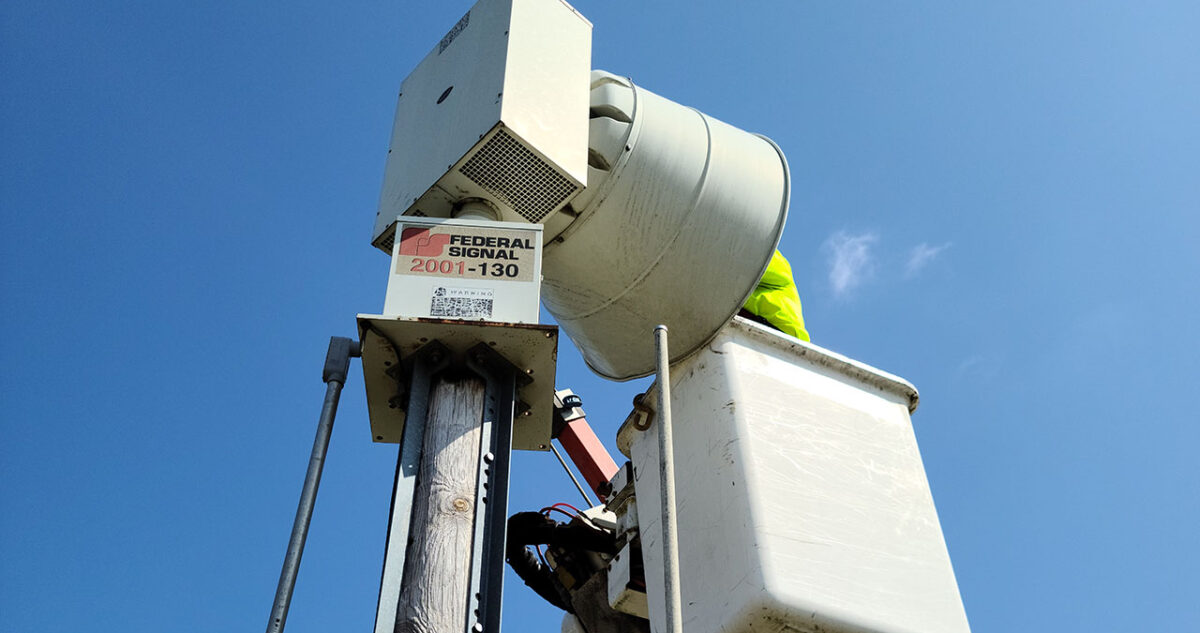
Keep your community’s outdoor warning systems reliable when it matters most.
Outdoor warning sirens are one of the most critical components of any community’s emergency alert infrastructure. When severe weather, industrial incidents, or other emergencies strike, these systems provide the first line of defense in protecting lives and property.
However, even the most advanced siren systems require regular maintenance to perform reliably. Over time, batteries weaken, communication links degrade, and control software becomes outdated, all of which can lead to system failures if not addressed proactively.
At OmniWarn Public Safety, we help cities, counties, campuses, and industrial facilities across Oklahoma, Texas, Louisiana, New Mexico, Arkansas, and Arizona keep their outdoor warning sirens and mass notification systems in top working order. To help you identify potential weak spots, here are the five most common siren system maintenance mistakes and how to avoid them.
1. Neglecting Regular Testing and Inspections
Routine testing is the foundation of a reliable emergency alert system. Many communities perform monthly audible siren tests, but some skip them due to concerns about public confusion or time constraints. The result? Undetected mechanical, electrical, or communication failures that only surface when an actual emergency occurs.
Stay ahead of the problem with these steps:
- Schedule consistent audible and silent tests: ideally monthly or quarterly, depending on your local policies.
- Follow manufacturer and system design guidelines.
- Document every test result to track performance trends.
- Partner with a certified service provider like OmniWarn for annual inspections to verify siren rotation, tone output, and activation reliability.
Regular testing not only ensures readiness but also helps build public confidence in your warning system.
2. Ignoring Battery and Power System Health
One of the most common causes of siren failures during severe weather is a dead or underperforming battery. Sirens often rely on backup battery systems when grid power is lost, and those batteries degrade over time, especially in regions with extreme heat like Texas or Arizona.
Keep power sources reliable by:
- Replace batteries on a preventive schedule, not just when they fail.
- Perform periodic voltage and load tests to verify capacity.
- Inspect solar panels and charging systems for corrosion, loose wiring, or damage.
- Keep all power components clean, dry, and protected from pests or debris.
By maintaining healthy power systems, you ensure that your sirens remain operational even during prolonged outages.
3. Overlooking Communication Link Failures
Even if the sirens themselves are in perfect condition, they’re useless if they can’t receive an activation signal. Many modern systems rely on radio, cellular, satellite, or IP-based communication links and each of these can be disrupted by interference, equipment aging, or configuration changes.
Today’s warning networks often integrate with FEMA’s Integrated Public Alert and Warning System (IPAWS) to ensure coordinated, multi-channel activation across sirens, text alerts, and broadcast systems.
Ensure reliable activation with these steps:
- Test activation paths regularly, not just during audible siren tests.
- Verify that all radios and network modems are functioning and correctly programmed.
- Implement redundant communication channels (for example, radio + IP) to ensure reliability.
- Review your system installation and configuration annually with a professional technician.
Maintaining robust communication links guarantees that your alerts reach every siren promptly, even under adverse conditions.
4. Skipping Software and Firmware Updates
As outdoor warning systems become more advanced, many now rely on digital controllers and software platforms. Skipping updates or firmware patches can lead to operational issues, outdated security protocols, or compatibility problems with new components.
Keep your system current by:
- Keep your siren controllers, radio firmware, and base station software up to date.
- Schedule updates with your service provider to minimize downtime.
- Ensure that all updates are documented and tested after installation.
- Contact OmniWarn about maintenance and repair services for certified Federal Signal and other major siren brands.
Staying current with software updates isn’t just about convenience, it’s about ensuring your system performs flawlessly when seconds count.
5. Failing to Document Maintenance and Service History
Without accurate maintenance records, it’s nearly impossible to track recurring issues or prove system readiness. Missing documentation can also create compliance challenges for municipalities or industrial facilities that must meet safety regulations.
Keep your maintenance history working for you by:
- Maintain a detailed digital log of all inspections, tests, and repairs.
- Include dates, technician notes, and parts replaced.
- Use asset management software or cloud-based tools for easy access and reporting.
- Work with a provider like OmniWarn that offers comprehensive service documentation and performance reporting.
Good records not only help you stay organized but also demonstrate your commitment to public safety and operational accountability.
Pro Tip: Don’t Wait for a Failure to Plan for Repairs
Waiting until a siren fails during a storm is a costly and dangerous mistake. Proactive maintenance programs identify and resolve issues before they cause downtime, saving you time, money, and potentially lives.
OmniWarn’s siren repair and maintenance services include preventive inspections, full-system diagnostics, and certified Federal Signal parts and labor. Our factory-trained technicians serve customers across Oklahoma, Texas, Louisiana, New Mexico, Arkansas, and Arizona — ensuring every system we maintain is ready for the next emergency.
Don’t Let Neglect Silence Your Sirens
Outdoor warning sirens are only as reliable as the care they receive. By avoiding these five common maintenance mistakes and partnering with an experienced provider, you can ensure your system is always ready to perform when your community needs it most.
If you’re unsure about the current health of your siren network, request a free maintenance consultation with OmniWarn Public Safety today. Our team can inspect, test, and optimize your system, helping you stay alert today, and alive tomorrow.